Device classification
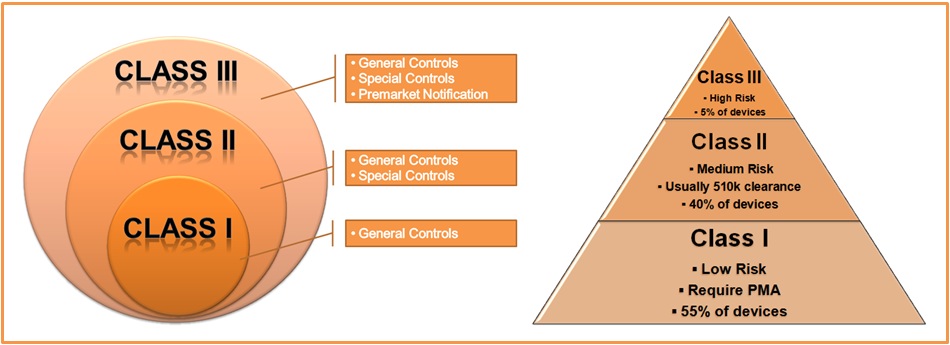
In FDA Regulations there are three types of device:
Contents
Class I Medical Devices
Class I Medical Devices are subject only to the FDA's General Controls because they are the least complicated and present the least risk. The FDA's general controls are though to provide reasonable asurance of the safe and effective use of these devices:
- Register manufacturing and distribution locations
- List device to be marketed with FDA
- Manufacture the devices in accordance with Good Manufacturing Practices
- Label medical devices in accordance with the labeling regulations, 21 CFR 801 or 21 CFR 809
- Report adverse events of medical device as identified by the user, manufacturer and/or distributor
Examples
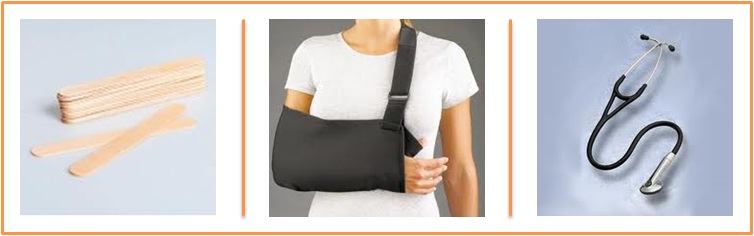
Examples of Class I devices include tongue depressors, arm slings, and stethoscopes:
Class II Medical Devices
Class II Medical Devices are more complicated and present greater risk than Class I devices. Class II devices are subject to FDA's General Controls. Furthermore, because those controls do not provide reasonable assurance of the device safety and effectiveness, these devices are subject to any specific performance standards, postmarket surveillance, patient registry, guidelines, and premarket notification requirements promulgated by the FDA.
Class II Medical Devices have the potential to pose a mild risk to a patient if used incorrectly. General controls alone are not adequate to assure the safety and effectiveness of the device. Due to these risks, special controls must be implemented in addition to general controls. Class II devices typically require pre-market notification by submission and FDA review of a 510(k) clearance to market submission. Special Controls applicable to Class II Devices are as follows.
- Special labeling requirements,
- Mandatory performance standards, both International and United States
- Postmarket surveillance
- FDA medical device specific guidance
Examples
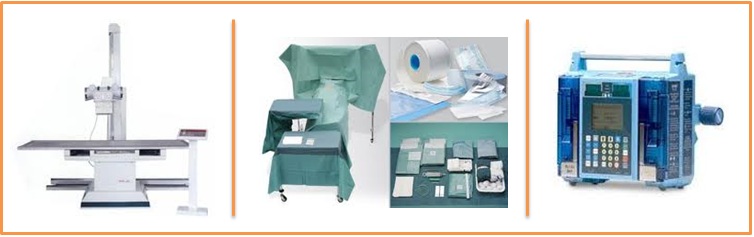
Examples of Class II devices include physiologic monitors, x-ray systems, gas analyzers, pumps, and surgical drapes:
See also: Premarket notification
Class III Medical Devices
Class III Medical Devices are devices that cannot be classified as Class I or Class II because:
- General and special control do not provide reasonable assurance of their safety and effectiveness
- The devices is to be used in supporting or sustaning human life and
- The device presents a potential unreasonable risk of illness or injury.
Class III devices typically require pre market approval (PMA). PMA application content includes:
- Full reports of all information, published or which should reasonably be known to the applicant, concerning investigations which have been made to show whether or not such device is safe and effective
- Full statement of the components, properties and principles of operation for the device
- Full description of the methods and the facilities used for the manufacturing, processing, packing and installation of the device
- Reference to any existing performance standards and adequate information to show that the device fully meets each standard
- Sample of the device or the location of one or more devices readily available for examination and testing in the instance that the device is burdensome to move;
- The labeling proposed to be used for the device;
Examples
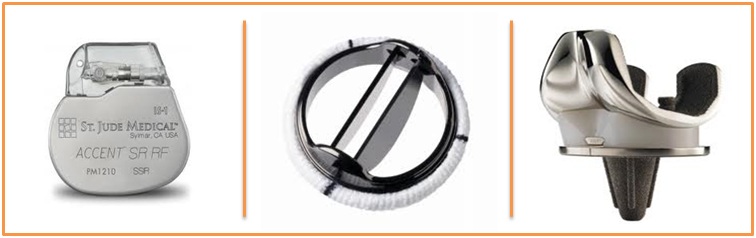
Examples | of Class III devices are pacemakers, replacement heart valves and total joint replacements:
See also: Premarket approval
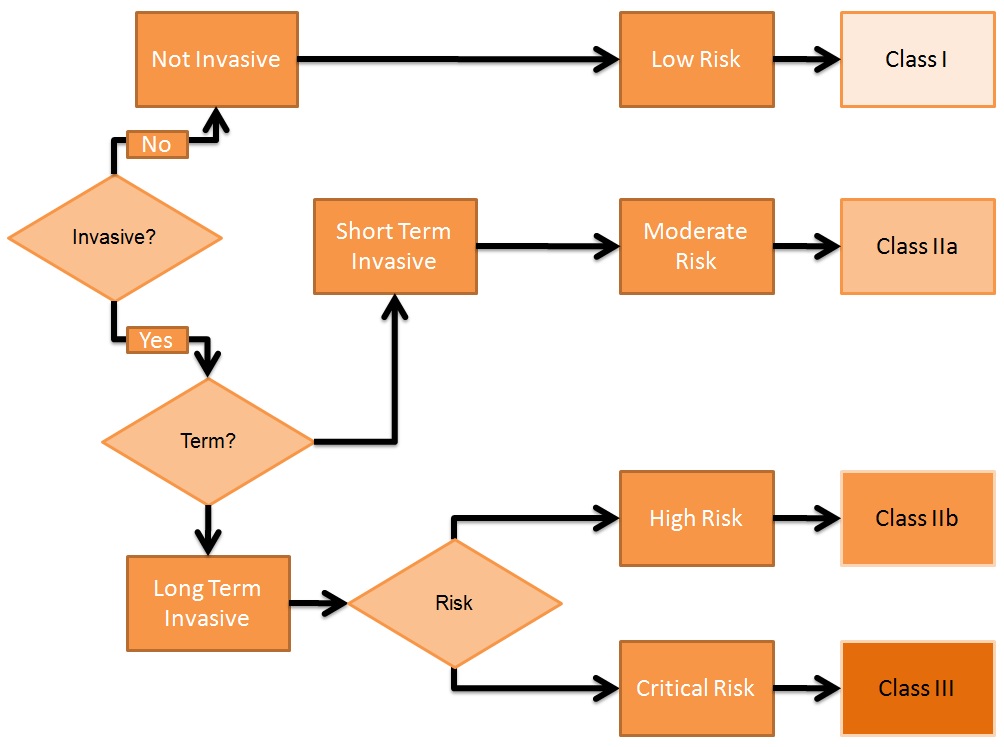
Source(s): http://www.ece.uc.edu/POC-CENT/funding/Additional%20Information/fda-classification
