CFR 21-820.30f - Design Verification
Jump to navigation
Jump to search
Each manufacturer shall establish and maintain procedures for verifying the device design. Design verification shall confirm that the design output meets the design input requirements. The results of the design verification, including identification of the design, method(s), the date, and the individual(s) performing the verification, shall be documented in the Design History File (DHF).
Attention points
Design verification and validation are two different activities:
- Design verifications intent is to ensure that the Design Outputs meet the Design Inputs. Design verification can be described as the activities with determining if the device was made 'right'.
- Design validation refers to activities that determine whether the device was made correctly and whether the device meets its intended uses.
See also the picture below to see the difference:
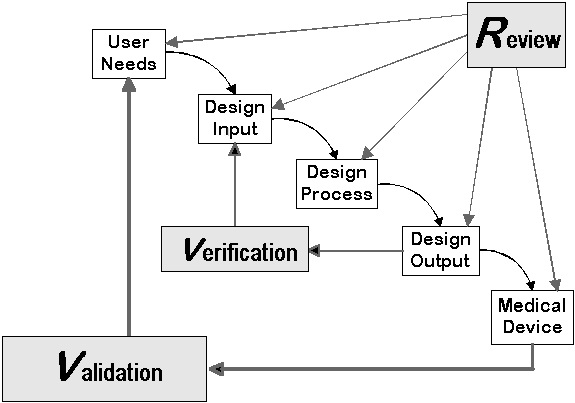
Design verification and validation activities
In CFR 21-820.30f - Design Verification and CFR 21-820.30g - Design Validation. Design verification activities include the following:
- Verification training by the design team
- Pretesting review that consists of a complete and thorough review of the following:
- Design inputs or requirements
- Design outputs or specifications
- Assessments to ensure that the design output or specifications meet the design input or requirements
- Risk analysis and control of identified individual hazards
- All labelling against requirements, specifications and risk analysis including documentaion risk or hazards
- Master Verification Plan including the following:
- Verification criteria
- Verification assumptions and expectations
- Verification personnel, their qualifications and responsibilities
- Appropriate testing of the following:
- Individual parts elements, components, modules, software components
- All inputs under normal, abnormal and absurd conditions
- Testing deviations or failures
- Deviations or failures after approprate corrective actions
- Equipment calibrated with test equipment and controlled with appropriate requirements
- Master verification and test plans should do the following:
- Consider any Premarket notification documetation requirements
- Perform according to written and approved master verification plan and test plans
- Ensure identified risks or hazards are fully tested via written test plans
- Documentation that verifies design review and appropriate testing
- Identification of the device
- Methods used in the verification
- Dates
- Individuals performing the verification
- All verification documentation should be considered Controlled Documentation
- Verification review in which appriopriate individuals review and approve all verifictaion activities, including master verification plan, test plans, test results and any retesting after corrective actions or changes.
Software Verification is a special topic in the context of design verification.
