Implication Questions
Jump to navigation
Jump to search
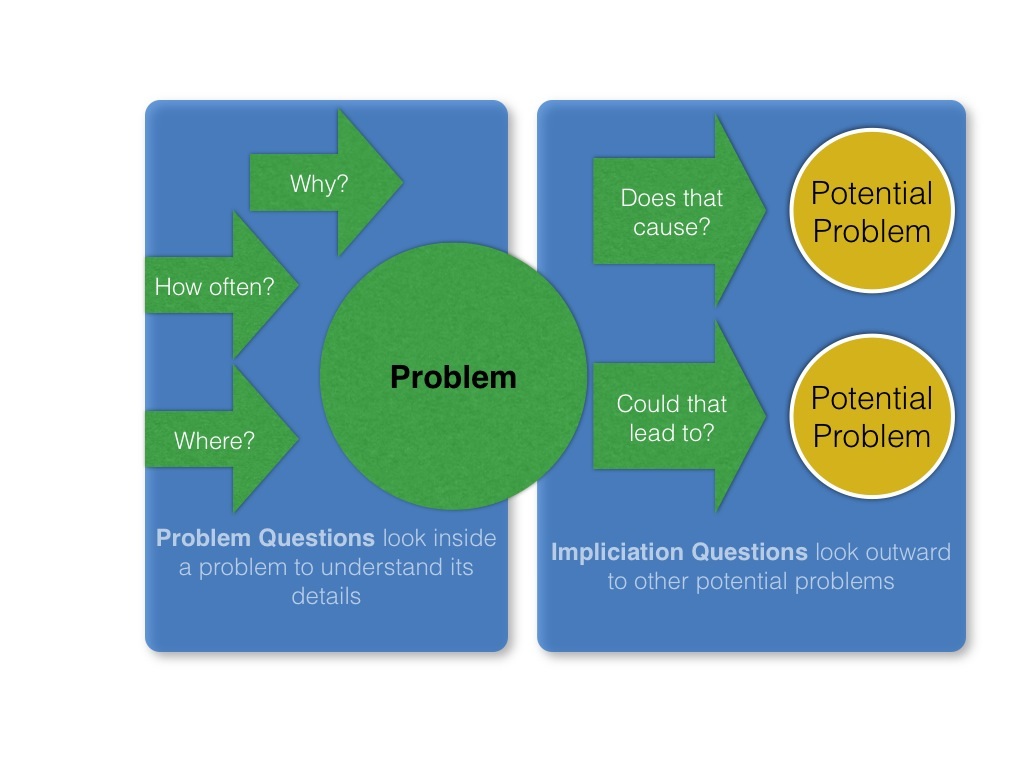
An implication question is asking about the consequences, effect or implications or a buyers problems, difficulties or dissatisfactions. The goal of implication questions is build the pain before presenting the solution by:
- focussing on the consequences of the problem
- extending and expanding the effects of the problem
- linking a problem to other potential problems
Definition
Asking questions about the consequences or effects of the buyers problems, diffulcties or satisfactions
Examples
- What effect does that problem has on the outputs?
- Could that lead to lower costs?
- What effect do these problems have on your competitive position?
- Could that lead to an increase in your costs?
- How will this problem affect your people's productivity?
- Could that unreliability create waste that adds to your costs?
Impact
The most powerful of the SPIN questions. Top sales people ask lots of Implication Questions and are able to uncover more potential problems this way:
High and low risk
The biggest mistake is to introduce a solution before the Explicit Need has fully developed. Make sure you build a bridge to your solution first. High risk:
- Too early in the call
- With implications you cannot solve
- In sensitive areas (organisational issues, politics, personal issues or a recent buyer decision)
Low risks:
- When problems are significant
- When problems are unclear
- When problems require redefinition
Practical tips
- Do the Exercise to explore implication questions
- Plan your implication questions ahead
- To be able to ask implication questions you need business and application knowledge
