Build-Measure-Learn
Revision as of 08:14, 25 August 2020 by Dirkjan (talk | contribs) (Created page with "In The Lean Startup one of the key concepts is that of ''build-measure-learn''. <html><img src = "/static/files/MBI/Other/buildmeasurelearn.jpg" width=...")
In The Lean Startup one of the key concepts is that of build-measure-learn.
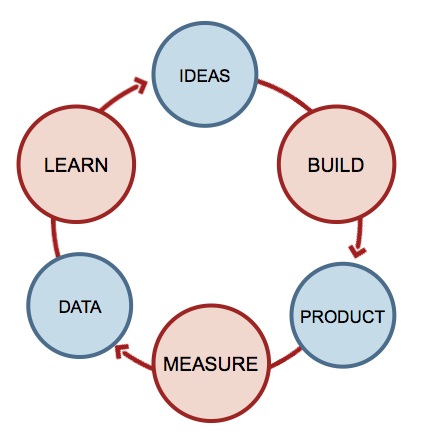
- Ideas
- All startups start out with an idea and a strategy based on certain assumptions. The most important strategy assumptions are so called leap-of-fate assumption because they make or break the value proposition of the venture.
- Sharpen your ideas by working with a Customer Archetype@design and validate them (see also Empathy Map@games)
- Beware of analysis paralysis and start validating your ideas quickly!
- Build
- As your first product targets Early Adopter@marketing, it does not need to be perfect.
- Most people overestimate the # features that need to be present in a product when in doubt simplify
- Product
- Try to build a Minimal Viable Product as soon as possible to test your leap of fate hypothesis
- Measure
- The concept of Innovation accounting enables a startup (or new in company innovation) to validate objectively that they are learning how to grow a sustainable business.
- Each startup has a different hypothesis on their financial operational model. Depending on these assumptions, learning milestones will be different.
- As an example, in a manufacturing company, growth depends on three things:
- The profitability of each customer
- The cost of acquiring new customers
- The repeat purchase rate of existing customers
- These are the basic drivers for this companies growth model
- By contrast, eBay's success depends on:
- Network effects, sellers want the highest number of potential customers, buyers want the marketplace with the biggest competition among sellers.
- Data
- A useful concept in measuring your business is Cohort Analysis
- Be aware of Vanity Metrics. Using Cohort Analysis you can measure if customers in new cohorts actually use the product more, are willing to pay more or otherwise are more engaged with the product.
- Learn
- Validated Learning in a Kanban@kanban board is a great way to have developers engage in how useful their features and ideas work in a customer environment.
