Virtual value chain
Jump to navigation
Jump to search
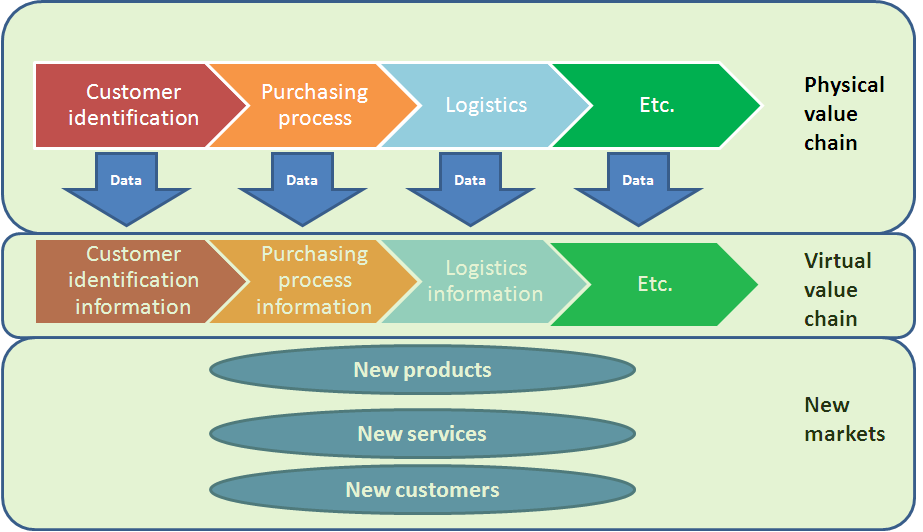
The virtual value chain illustrates how information in the physical value chain can be used to develop new markets:
- Firm infrastructure
- ERP Systems
- Online investor relations
- Human resource management
- Self service personnel portals
- Web based training
- Technology development
- Collaborative product design
- Knowledge directories
- Real time access R&D to online sales and service information
- Procurement
- Internet based demand planning
- Linked purchase, factory and forecasting systems
- Inbound logistics
- Real time integrated scheduling
- Dissemination of real time inbound and in progress inventory data
- Operations
- Integrated information of exchange
- Outbound logistics
- Real time transactions of orders
- Automated customer specific agreements
- Customer access to product development and delivery status
- Collaborative integration with customer forecasting systems
- Marketing and sales
- Online sales channels
- Real time inside and outside access to customer information
- Online product configurators
- Customer tailed marketing via profiling
- After-sales service
- Online support
- Customer self service
- Real time field service access
Part of M8-S2 - Reading - Strategies for E-Business - Chapter 4 - Internal Analysis
