M5-Strategy-S3 - The competitive environment
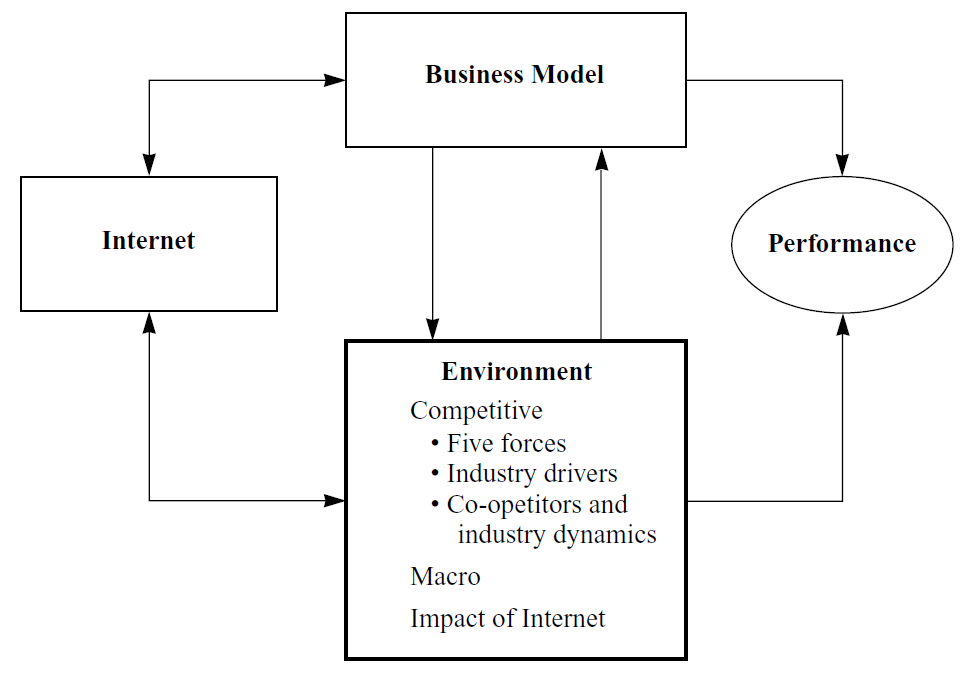
Porter's five forces state simply that the profits that firms make are equal to the revenues that they receive from customers in exchange for the products or services that they offer, less the costs of offering them.
{{{ Profits = Revenues - Costs = P(Q) x Q(P) -C(Q) }}}
If
- Suppliers have high enough bargaining power to extract higher prices from industry firms
- the costs to the firms are higher and their profits reduced.
- If these powerful suppliers instead get away with offering firms lower-quality inputs, these firms will end up with inferior products for their customers.
- This in turn will reduce their ability to charge premium prices for the products or they may have to spend more to improve product quality.
Either way, industry profits are reduced
Powerful customers have an analogous effect on firm profitability. They
- Can extract lower prices and higher-quality products from firms
- Lower prices and higher quality mean less profitability.
- A high threat of new entrants forces firms to charge less for their products.
- They may also be forced to take costly measures to create barriers to entry or differentiate their products.
Either way firm profitability is reduced.
Increased rivalry among existing firms can lead to price wars or costly attempts to differentiate products, both of which reduce profitability. Substitute products provide a powerful alternative to firms’ products, thereby putting pressure not only on the prices that firms can charge, but also on the quantities that they can sell.
An industry in which suppliers and buyers have bargaining power, and in which rivalry, the threat of new entry, and the power of substitutes are high, is said to be unattractive because, on the average, the industry’s profits are low
