Difference between revisions of "Channel partnering"
Jump to navigation
Jump to search
| Line 1: | Line 1: | ||
| − | Channel partnering | + | Channel partnering creates opportunities for companies to concentrate their activities to lesser core competencies. However, there are a few risks: |
| + | # ''Risk of inconsistency'' | ||
| + | ## The customer expects a consistent offering. When a supplier join forces it becomes more difficult to offer a consistent [[Customer Value Proposition|Customer Value Proposition]] | ||
| + | # ''Risk of competence leakage'' | ||
| + | ## The interactions between personel of the partner and the company may result in competence leakages. | ||
| + | # ''Risk of appropriability loss'' | ||
| + | ## An important question is whether the manufacturer or the distributor owns the end customer? | ||
| + | |||
| + | |||
| + | |||
| + | <html><img src = "/static/files/MBI/Module%2011/channelpartnering.png" width="600"/></html> | ||
| + | |||
| + | |||
[[Category:marketing]] | [[Category:marketing]] | ||
Latest revision as of 19:48, 27 August 2020
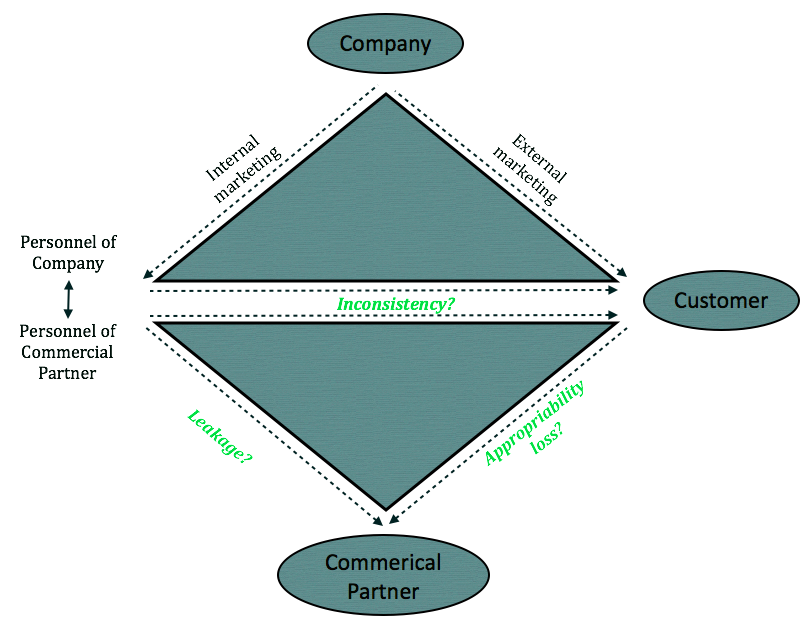
Channel partnering creates opportunities for companies to concentrate their activities to lesser core competencies. However, there are a few risks:
- Risk of inconsistency
- The customer expects a consistent offering. When a supplier join forces it becomes more difficult to offer a consistent Customer Value Proposition
- Risk of competence leakage
- The interactions between personel of the partner and the company may result in competence leakages.
- Risk of appropriability loss
- An important question is whether the manufacturer or the distributor owns the end customer?