Difference between revisions of "Cash conversion cycle"
(Replaced content with "Cash conversion cycle Category:finance Category:Accounting Category:M9 Category:Term") Tag: Replaced |
|||
| Line 1: | Line 1: | ||
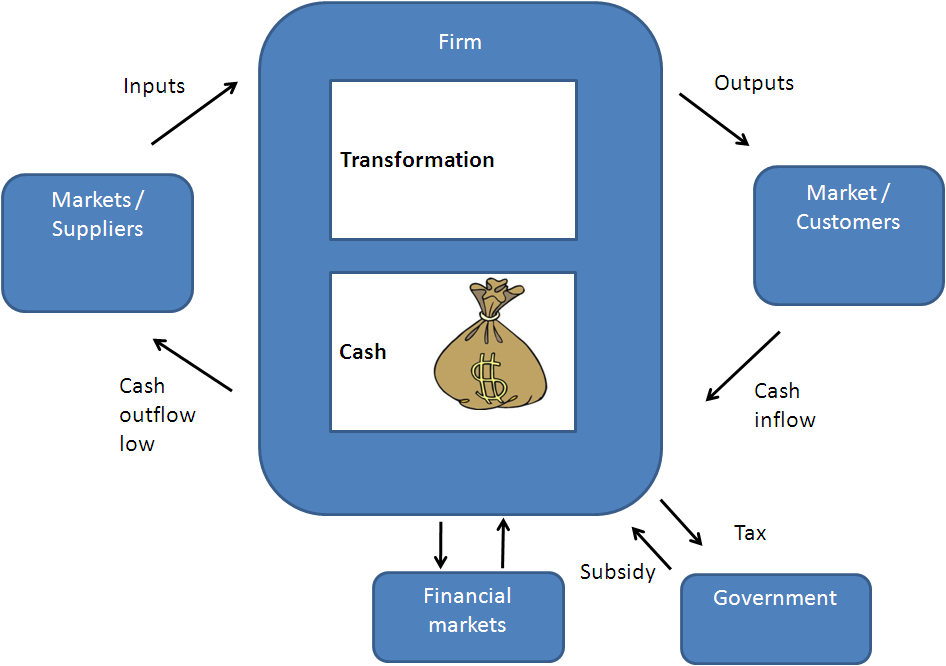
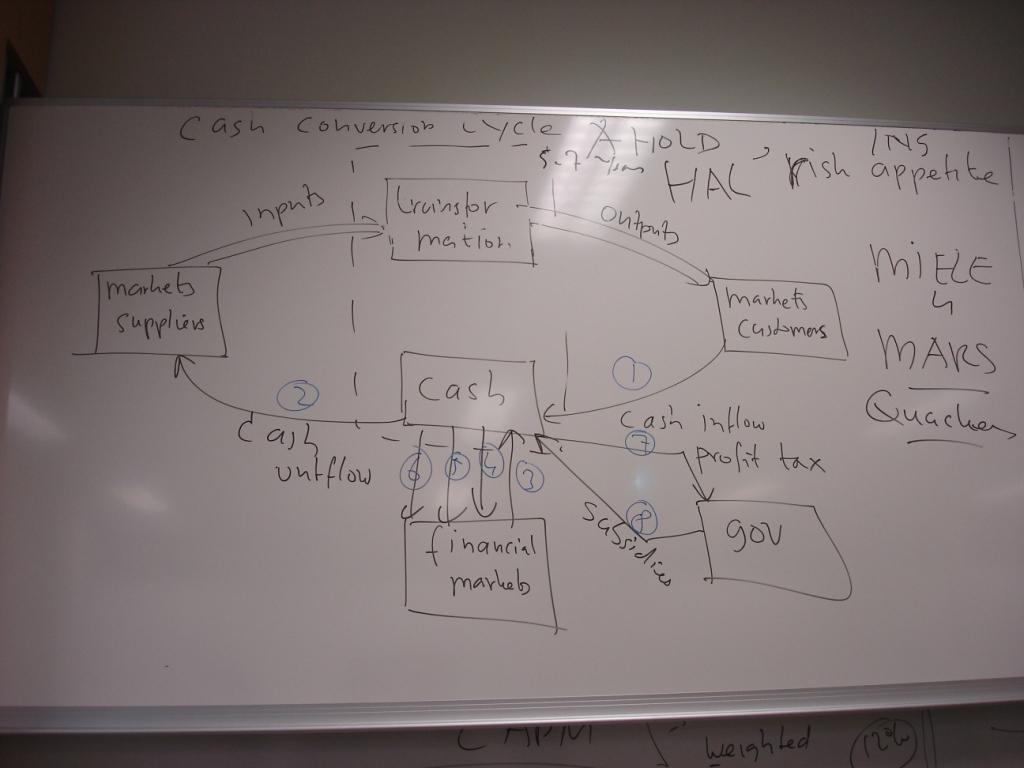
| − | Cash conversion | + | In management accounting, the Cash Conversion Cycle (CCC) measures how long a firm will be deprived of cash if it increases its investment in resources in order to expand customer sales. It is thus a measure of the liquidity risk entailed by growth. However, shortening the CCC creates its own risks: while a firm could even achieve a negative CCC by collecting from customers before paying suppliers, a policy of strict collections and lax payments is not always sustainable. |
| + | |||
| + | |||
| + | |||
| + | <html><img src = "/static/files/MBI/Module%2012/cashconversioncalculation.PNG" width="600"/></html> | ||
| + | |||
| + | |||
| + | |||
| + | |||
| + | {{{ | ||
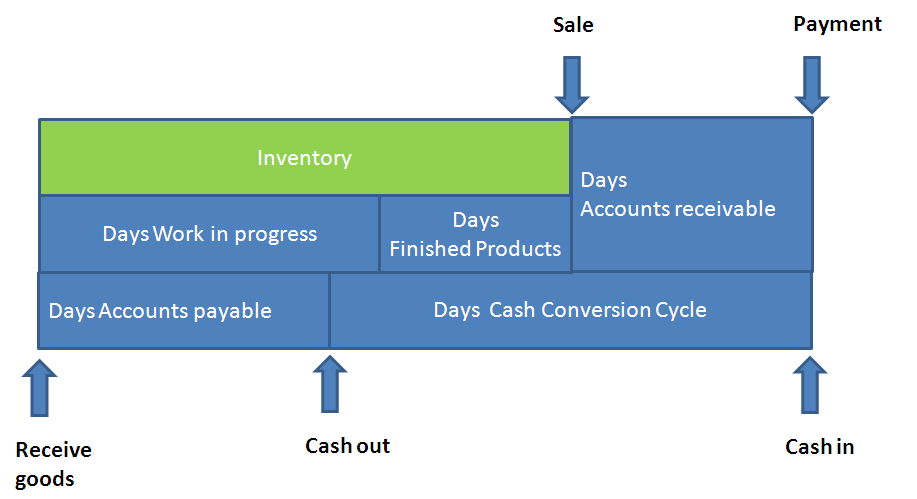
| + | CCC = # days between disbursing cash and collecting cash in connection with undertaking a discrete unit of operations. | ||
| + | |||
| + | = Inventory conversion period + Receivables conversion period – Payables conversion period | ||
| + | = Avg. Inventory COGS / 365 + Avg. [[Accounts Receivable]] Credit Sales / 365 – Avg. [[Accounts Payable]] [[COGS]] / 365 | ||
| + | }}} | ||
| + | |||
| + | <html> | ||
| + | <img src="/static/files/MBI/Module%209/cashconversioncycle.PNG" width=500> | ||
| + | </html> | ||
| + | |||
| + | <html> | ||
| + | <img src="/static/files/MBI/Module%209/DSC08465a.JPG" width=500> | ||
| + | </html> | ||
| + | |||
[[Category:finance]] | [[Category:finance]] | ||
Latest revision as of 19:23, 27 August 2020
In management accounting, the Cash Conversion Cycle (CCC) measures how long a firm will be deprived of cash if it increases its investment in resources in order to expand customer sales. It is thus a measure of the liquidity risk entailed by growth. However, shortening the CCC creates its own risks: while a firm could even achieve a negative CCC by collecting from customers before paying suppliers, a policy of strict collections and lax payments is not always sustainable.
{{{
CCC = # days between disbursing cash and collecting cash in connection with undertaking a discrete unit of operations.
= Inventory conversion period + Receivables conversion period – Payables conversion period = Avg. Inventory COGS / 365 + Avg. Accounts Receivable Credit Sales / 365 – Avg. Accounts Payable COGS / 365 }}}