Difference between revisions of "Mastering and Managing the FDA Maze"
(Created page with "<<formTiddler <missing '>>'>NewBookTemplate>> <html> <iframe src="http://rcm.amazon.com/e/cm?t=httptiddlyweb-20&o=1&p=8&l=as1&asins=0873894553&ref=tf_til&...") |
|||
| Line 1: | Line 1: | ||
| − | |||
| + | |||
| + | Amazon link: | ||
<html> | <html> | ||
| − | < | + | <a href="https://www.amazon.com/dp/0873894553">Mastering and Managing the FDA Maze</a> |
</html> | </html> | ||
| − | + | '''Author''':Gordan Hamack | |
| + | |||
| + | '''Rating''':*** | ||
| + | |||
| + | |||
=Summary= | =Summary= | ||
Latest revision as of 16:56, 27 August 2020
Amazon link:
Mastering and Managing the FDA Maze
Author:Gordan Hamack
Rating:***
Contents
Summary
Chapter 1 - Introduction
Device classification
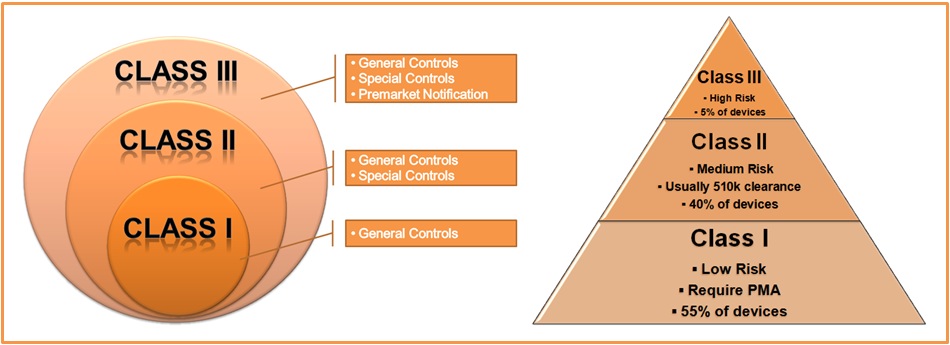
In FDA Regulations there are three types of device:
Class I Medical Devices
Class I Medical Devices are subject only to the FDA's General Controls because they are the least complicated and present the least risk. The FDA's general controls are though to provide reasonable asurance of the safe and effective use of these devices:
- Register manufacturing and distribution locations
- List device to be marketed with FDA
- Manufacture the devices in accordance with Good Manufacturing Practices
- Label medical devices in accordance with the labeling regulations, 21 CFR 801 or 21 CFR 809
- Report adverse events of medical device as identified by the user, manufacturer and/or distributor
Examples
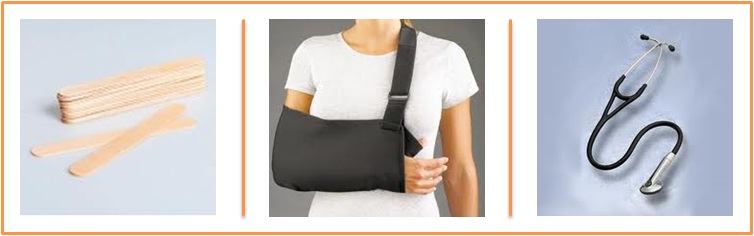
Examples of Class I devices include tongue depressors, arm slings, and stethoscopes:
Class II Medical Devices
Class II Medical Devices are more complicated and present greater risk than Class I devices. Class II devices are subject to FDA's General Controls. Furthermore, because those controls do not provide reasonable assurance of the device safety and effectiveness, these devices are subject to any specific performance standards, postmarket surveillance, patient registry, guidelines, and premarket notification requirements promulgated by the FDA.
Class II Medical Devices have the potential to pose a mild risk to a patient if used incorrectly. General controls alone are not adequate to assure the safety and effectiveness of the device. Due to these risks, special controls must be implemented in addition to general controls. Class II devices typically require pre-market notification by submission and FDA review of a 510(k) clearance to market submission. Special Controls applicable to Class II Devices are as follows.
- Special labeling requirements,
- Mandatory performance standards, both International and United States
- Postmarket surveillance
- FDA medical device specific guidance
Examples
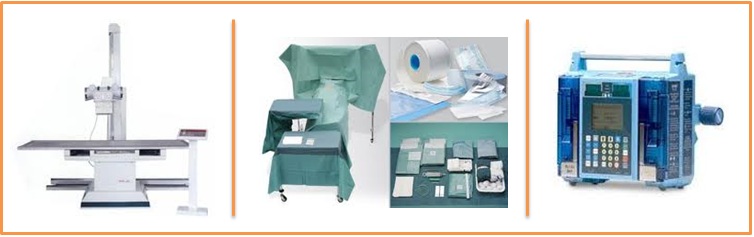
Examples of Class II devices include physiologic monitors, x-ray systems, gas analyzers, pumps, and surgical drapes:
See also: Premarket notification
Class III Medical Devices
Class III Medical Devices are devices that cannot be classified as Class I or Class II because:
- General and special control do not provide reasonable assurance of their safety and effectiveness
- The devices is to be used in supporting or sustaning human life and
- The device presents a potential unreasonable risk of illness or injury.
Class III devices typically require pre market approval (PMA). PMA application content includes:
- Full reports of all information, published or which should reasonably be known to the applicant, concerning investigations which have been made to show whether or not such device is safe and effective
- Full statement of the components, properties and principles of operation for the device
- Full description of the methods and the facilities used for the manufacturing, processing, packing and installation of the device
- Reference to any existing performance standards and adequate information to show that the device fully meets each standard
- Sample of the device or the location of one or more devices readily available for examination and testing in the instance that the device is burdensome to move;
- The labeling proposed to be used for the device;
Examples
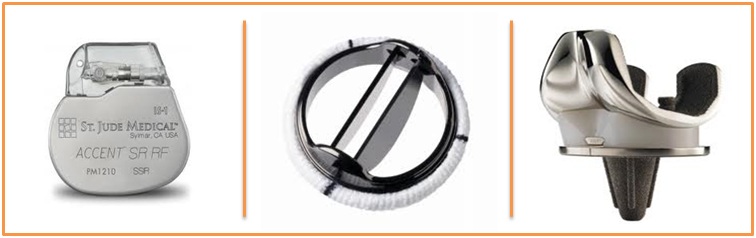
Examples | of Class III devices are pacemakers, replacement heart valves and total joint replacements:
See also: Premarket approval
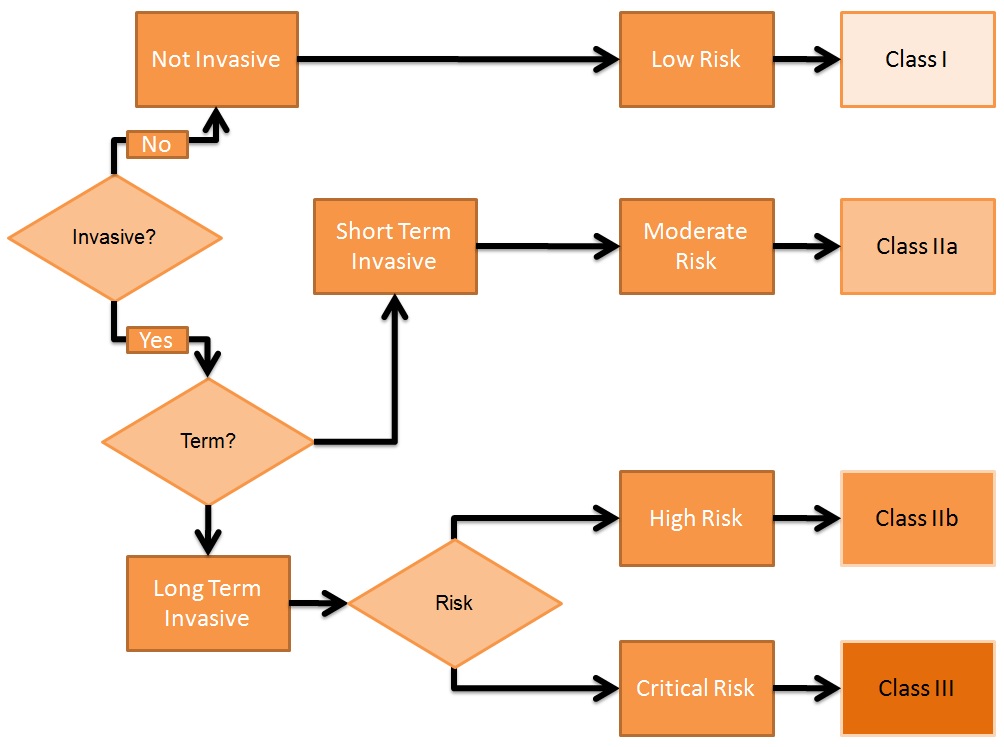
Source(s): http://www.ece.uc.edu/POC-CENT/funding/Additional%20Information/fda-classification
CFR
In the FDA Regulations the abreviation CFR stands for Code of Federal Regulations.
CFR Regulations Described:
- CFR 21-007 - Enforcement Policy - Recalls
- CFR 21-011 - Electronic Records; Electronic Signatures
- CFR 21-1010 - Performance Standards for Electronics Products
- CFR 21-801 - Labeling
- CFR 21-803 - Medical Device Reporting
- CFR 21-806 - Medical Devices; reports of corrections and removals
- CFR 21-807 - Establishment Registration and Device Listing
- CFR 21-814 - Premarket Approval of Medical Devices
- CFR 21-820 - Quality System Regulations
- CFR 21-820.20 - Management Control Flowchart
- CFR 21-820.20 - Management Responsibility
- CFR 21-820.20a - Quality System
- CFR 21-820.20b - Organization
- CFR 21-820.20c - Management review
- CFR 21-820.20d - Quality Planning
- CFR 21-820.20e - Quality System Procedures
- CFR 21-820.25 - Personnel
- CFR 21-820.25 - Personnel - General
- CFR 21-820.25 - Personnel - Training
- CFR 21-820.30a - General
- CFR 21-820.30b - Design and development planning
- CFR 21-820.30c - Design Input
- CFR 21-820.30d - Design Output
- CFR 21-820.30e - Design Review
- CFR 21-820.30f - Design Verification
- CFR 21-820.30g - Design Validation
- CFR 21-820.30h - Design Transfer
- CFR 21-820.30i - Design Changes
- CFR 21-820.30j - Design History File
- CFR 21-820.40a - Document approval and distribution
- CFR 21-820.40b - Document Changes
- CFR 21-821 - Medical Device Tracking Requirements
- CFR 21-840 - Document Controls
- CFR 21-860 - Medical Device Classification Procedures
- CFR 21-861 - Procedures for Performance Standards Development
- CFR 21-892 - Radiological Devices
- CFR 21-895 - Banned Devices
- Device Master File
- Device Master Record
Chapter 2 - FDA Inspections
FDA Inspections
To understand FDA Inspections the following concepts & definitions are important during inspections:
- A Bottum-up inspection was the FDA standard inspection prior to 1998.
- Comprehensive inspection is an inspection on all elements of a firms quality system.
- Directed inspection is an inspection performed on specific elements of a firm's quality system.
- Establishment Inspection Report, is a report completed by the FDA after an inspection.
- Form FDA 482, is a notice of inspection.
- Form FDA 483, contains the inspectional observations.
- Quality System Inspection Technique (QSIT) is the FDA's current inspection technique.
- A Table-Top Inspection is an inspection strategy of reviewing a firm's written procedures and records.
- A Top-Down Inspection is the FDA's latest inspection strategy in which inspectors are taught to evaluate the quality system and sampling quality system records
- Track I Inspection is a limitted inspection of the quality system conduced every two years
- Track II Inspection is a complete audit every four years
- Situation I conditions are those conditions that provide evidence that there are significant errors in the manufacturers production process leading to defective devices.
- Situation II conditions are those conditions that are not meeting the Situation I conditions.
- A Warning Letter is an administrative action typically issued to firms with Situation I conditions.
Inspection frequency
The FDA does not need a warrant to inspect any device manufacturer. Refusal to permit the inspection is a violation of The Act.
The following situations enter into the inspection assesment:
- Manufacturers whose last inspection was violative and who provided little or no compelling evidence of corrective measures
- Manufacures who received 510(k) clearance for a high-risk device within the past 12 months and who have not been inspected within the previous 2 years.
- Manufacturers of class II and class III devices who have never been inspected
- Manufacturers who have newly registered
- Manufacturers with a recently cleared 510(k)
Chapter 3 - Design Controls
These regulations implement FDA's responsibilities and authority over medical device manufacturers management, design, development, verficiation, manufacture, validation, distributoin, installation, support, quality assurance and records for each new or listed device.
This regulation is the major regulatory thrust of day-to-day FDA oversight of device manufacturers and the focus of this book. Most of the remaining chapers are specific to the Quality System Regulation. These regulations are also the agency's attempt to harmonize medical device regulation with international quality standards, specifically ISO 9000.
The Quality System Regulations are philosophically simple:
- Comply with the regulations
- Say what you do
- Do what you say
- Document that you have done what you say
The CFR regulations described with respect to Quality System Regulations are:
- CFR 21-007 - Enforcement Policy - Recalls
- CFR 21-011 - Electronic Records; Electronic Signatures
- CFR 21-1010 - Performance Standards for Electronics Products
- CFR 21-801 - Labeling
- CFR 21-803 - Medical Device Reporting
- CFR 21-806 - Medical Devices; reports of corrections and removals
- CFR 21-807 - Establishment Registration and Device Listing
- CFR 21-814 - Premarket Approval of Medical Devices
- CFR 21-820 - Quality System Regulations
- CFR 21-820.20 - Management Control Flowchart
- CFR 21-820.20 - Management Responsibility
- CFR 21-820.20a - Quality System
- CFR 21-820.20b - Organization
- CFR 21-820.20c - Management review
- CFR 21-820.20d - Quality Planning
- CFR 21-820.20e - Quality System Procedures
- CFR 21-820.25 - Personnel
- CFR 21-820.25 - Personnel - General
- CFR 21-820.25 - Personnel - Training
- CFR 21-820.30a - General
- CFR 21-820.30b - Design and development planning
- CFR 21-820.30c - Design Input
- CFR 21-820.30d - Design Output
- CFR 21-820.30e - Design Review
- CFR 21-820.30f - Design Verification
- CFR 21-820.30g - Design Validation
- CFR 21-820.30h - Design Transfer
- CFR 21-820.30i - Design Changes
- CFR 21-820.30j - Design History File
- CFR 21-820.40a - Document approval and distribution
- CFR 21-820.40b - Document Changes
- CFR 21-821 - Medical Device Tracking Requirements
- CFR 21-840 - Document Controls
- CFR 21-860 - Medical Device Classification Procedures
- CFR 21-861 - Procedures for Performance Standards Development
- CFR 21-892 - Radiological Devices
- CFR 21-895 - Banned Devices
- Device Master File
- Device Master Record
Chapter 4 - Design Controls
Read the official FDA guidance to design controls [[1]]. The CFR regulations described with respect to Design Controls are:
- CFR 21-820.30a - General
- CFR 21-820.30b - Design and development planning
- CFR 21-820.30c - Design Input
- CFR 21-820.30d - Design Output
- CFR 21-820.30e - Design Review
- CFR 21-820.30f - Design Verification
- CFR 21-820.30g - Design Validation
- CFR 21-820.30h - Design Transfer
- CFR 21-820.30i - Design Changes
- CFR 21-820.30j - Design History File
- CFR 21-820.40a - Document approval and distribution
- CFR 21-820.40b - Document Changes
- CFR 21-840 - Document Controls
Overview of Medical Device Design and its Control
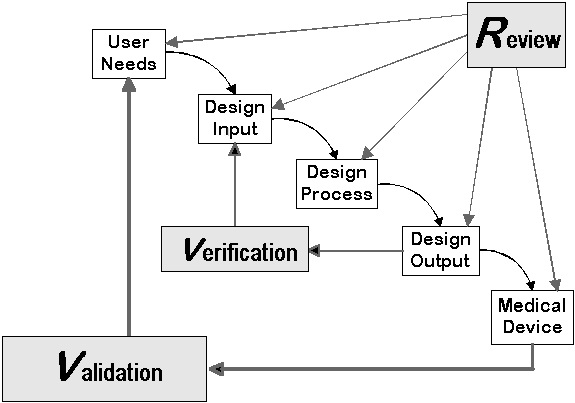
Terms
- CFR 21-820.20 - Management Control Flowchart
- CFR 21-820.20 - Management Responsibility
- CFR 21-820.20a - Quality System
- CFR 21-820.20b - Organization
- CFR 21-820.20c - Management review
- CFR 21-820.20d - Quality Planning
- CFR 21-820.20e - Quality System Procedures
- CFR 21-820.25 - Personnel
- CFR 21-820.25 - Personnel - General
- CFR 21-820.25 - Personnel - Training
- Device Master File
- Device Master Record
Chapter 5 - Document Controls
Each manufacturer shall establish and maintain procedures to control all documents that are required by this part.
The followog terms and concepts are relevant to 21-840 - Document Controls
- CFR 21-007 - Enforcement Policy - Recalls
- CFR 21-011 - Electronic Records; Electronic Signatures
- CFR 21-1010 - Performance Standards for Electronics Products
- CFR 21-801 - Labeling
- CFR 21-803 - Medical Device Reporting
- CFR 21-806 - Medical Devices; reports of corrections and removals
- CFR 21-807 - Establishment Registration and Device Listing
- CFR 21-814 - Premarket Approval of Medical Devices
- CFR 21-820 - Quality System Regulations
- CFR 21-820.20 - Management Control Flowchart
- CFR 21-820.20 - Management Responsibility
- CFR 21-820.20a - Quality System
- CFR 21-820.20b - Organization
- CFR 21-820.20c - Management review
- CFR 21-820.20d - Quality Planning
- CFR 21-820.20e - Quality System Procedures
- CFR 21-820.25 - Personnel
- CFR 21-820.25 - Personnel - General
- CFR 21-820.25 - Personnel - Training
- CFR 21-820.30a - General
- CFR 21-820.30b - Design and development planning
- CFR 21-820.30c - Design Input
- CFR 21-820.30d - Design Output
- CFR 21-820.30e - Design Review
- CFR 21-820.30f - Design Verification
- CFR 21-820.30g - Design Validation
- CFR 21-820.30h - Design Transfer
- CFR 21-820.30i - Design Changes
- CFR 21-820.30j - Design History File
- CFR 21-820.40a - Document approval and distribution
- CFR 21-820.40b - Document Changes
- CFR 21-821 - Medical Device Tracking Requirements
- CFR 21-840 - Document Controls
- CFR 21-860 - Medical Device Classification Procedures
- CFR 21-861 - Procedures for Performance Standards Development
- CFR 21-892 - Radiological Devices
- CFR 21-895 - Banned Devices
- Device Master File
- Device Master Record
