Difference between revisions of "The Coaching Leadership Style"
Jump to navigation
Jump to search
(Replaced content with "The Coaching Leadership Style Category:goleman Category:Coleman Leadership Styles Category:M15 Category:Term") Tag: Replaced |
|||
| Line 1: | Line 1: | ||
| − | The | + | ="What did you learn? What would you do differently? What can we improve upon?”= |
| + | |||
| + | The primary objective of the coaching style is the ''''long term development of team members'''''. The coaching style is used to build long term capability. It is about understanding team members’ strengths and weaknesses -- and taking the time to learn about their aspirations. It is about helping each team member to be the best they can be. | ||
| + | |||
| + | We all learn from our mistakes as well as our successes. So sometimes a manager has to trade a short term drop in standards for the long term increase in team capability. | ||
| + | |||
| + | |||
| + | |||
| + | <html><img src = "/static/files/MBI/Module%2015/coaching.jpg" width="400"/></html> | ||
| + | |||
| + | |||
| + | |||
| + | =The coaching style in action= | ||
| + | When using this style a manager: | ||
| + | * helps team members identify their unique strengths and weaknesses -- in the light of their aspirations | ||
| + | * encourages team members to identify long term development goals | ||
| + | * provides on-going feedback to team members about their performance and development efforts | ||
| + | * listens and uses open-ended questions to encourage team members to solve their own work problems | ||
| + | * may trade of immediate standards of performance for long term development - sees mistakes as learning opportunities | ||
| + | |||
| + | =The coaching style is most effective:= | ||
| + | * when team members have a clear sense of their aspirations and are motivated to work towards them | ||
| + | * with team members who are interested in career development and long term planning to achieve their goals | ||
| + | * when team members are required to be innovative, to take calculated risks, to show initiative and to had their own solutions to work problems. | ||
| + | |||
| + | =The coaching style is least effective:= | ||
| + | * with new team members who lack experience in solving their work problems or determining how their day-to-day activities feed into their long term goals | ||
| + | * when team members need explicit direction and feedback | ||
| + | * when the manager lacks expertise in team members work areas | ||
| + | * in crisis situations | ||
| + | |||
| + | =If you feel the situation needs you to be ''more'' coaching:= | ||
| + | * '''Identify team members strengths and weaknesses''' | ||
| + | ** Take the time to help each team member think through their strengths and development needs. Help them assess the appropriateness of their aspirations. | ||
| + | * '''Establish development goals''' | ||
| + | ** Work with each team member to identify their long term development goals. Try to understand why a goal is important to them and how it supports their aspirations. | ||
| + | * '''Support their development plan''' | ||
| + | ** Determine the kind of support you can offer each individual and the role you will play as they carry out their development plan. Provide on-going feedback. | ||
| + | * '''Seek opportunities for your team members''' | ||
| + | ** Try to end or create opportunities to enhance your team members development. | ||
| + | ** This could include marketing their capabilities, inside or outside your own team. | ||
| + | * '''Encourage improvement''' | ||
| + | ** Review each of your team members’ progress. Advise on any adjustments to their development plans. Encourage them to picture their ideals and to keep working towards them. | ||
| + | * '''Provide regular coaching sessions''' | ||
| + | ** Use at least six open questions in each coaching session -~ listen carefully and replay what you hear. | ||
| + | =If you feel the situation needs you to be ''less'' coaching:= | ||
| + | * '''ls this just a habit?''' | ||
| + | ** 'ls coaching part of your organizational culture? | ||
| + | ** Do team members take responsibility for their own development? | ||
| + | ** What other managerial styles might raise the team's performance in the short term as well as the long term? | ||
| + | * '''Did it work in the past?''' | ||
| + | ** Have you always been able to rely on the involvement and engagement of team members? Will the coaching style work as effectively for new team members? | ||
| + | ** What else can you do to ensure that team members understand their roles as well as their own abilities? | ||
| + | * '''What might you be missing out on?''' | ||
| + | ** What are the risks in using the coaching style? | ||
| + | ** What is the impact of team members learning from their mistakes? | ||
| + | ** Can you expect others to wait patiently for the team's capability to increase? | ||
| + | * '''How do you see yourself as a manager?''' | ||
| + | ** Do you see your role as primarily about developing others? Do you put the team's development needs above organizational objectives? | ||
| + | ** Which other approaches might also be effective for the team? | ||
| + | ** Are team members not reaching their development goals? | ||
| + | ** Can you help by 'modeling' what a new behavior looks like? Will the pace setting style help them understand what they can do differently? | ||
| + | * '''Have you thought about each team member’s true motivation for development?''' | ||
| + | ** If you know they’re just not interested, then ensure you keep using the authoritative style and coercive style to provide clarity. | ||
| + | |||
[[Category:goleman]] | [[Category:goleman]] | ||
Latest revision as of 19:28, 27 August 2020
Contents
- 1 "What did you learn? What would you do differently? What can we improve upon?”
- 2 The coaching style in action
- 3 The coaching style is most effective:
- 4 The coaching style is least effective:
- 5 If you feel the situation needs you to be more coaching:
- 6 If you feel the situation needs you to be less coaching:
"What did you learn? What would you do differently? What can we improve upon?”
The primary objective of the coaching style is the 'long term development of team members. The coaching style is used to build long term capability. It is about understanding team members’ strengths and weaknesses -- and taking the time to learn about their aspirations. It is about helping each team member to be the best they can be.
We all learn from our mistakes as well as our successes. So sometimes a manager has to trade a short term drop in standards for the long term increase in team capability.
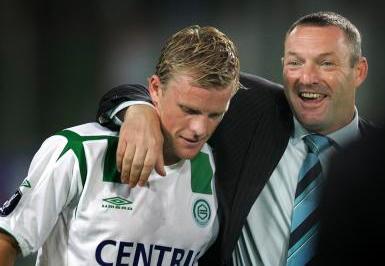
The coaching style in action
When using this style a manager:
- helps team members identify their unique strengths and weaknesses -- in the light of their aspirations
- encourages team members to identify long term development goals
- provides on-going feedback to team members about their performance and development efforts
- listens and uses open-ended questions to encourage team members to solve their own work problems
- may trade of immediate standards of performance for long term development - sees mistakes as learning opportunities
The coaching style is most effective:
- when team members have a clear sense of their aspirations and are motivated to work towards them
- with team members who are interested in career development and long term planning to achieve their goals
- when team members are required to be innovative, to take calculated risks, to show initiative and to had their own solutions to work problems.
The coaching style is least effective:
- with new team members who lack experience in solving their work problems or determining how their day-to-day activities feed into their long term goals
- when team members need explicit direction and feedback
- when the manager lacks expertise in team members work areas
- in crisis situations
If you feel the situation needs you to be more coaching:
- Identify team members strengths and weaknesses
- Take the time to help each team member think through their strengths and development needs. Help them assess the appropriateness of their aspirations.
- Establish development goals
- Work with each team member to identify their long term development goals. Try to understand why a goal is important to them and how it supports their aspirations.
- Support their development plan
- Determine the kind of support you can offer each individual and the role you will play as they carry out their development plan. Provide on-going feedback.
- Seek opportunities for your team members
- Try to end or create opportunities to enhance your team members development.
- This could include marketing their capabilities, inside or outside your own team.
- Encourage improvement
- Review each of your team members’ progress. Advise on any adjustments to their development plans. Encourage them to picture their ideals and to keep working towards them.
- Provide regular coaching sessions
- Use at least six open questions in each coaching session -~ listen carefully and replay what you hear.
If you feel the situation needs you to be less coaching:
- ls this just a habit?
- 'ls coaching part of your organizational culture?
- Do team members take responsibility for their own development?
- What other managerial styles might raise the team's performance in the short term as well as the long term?
- Did it work in the past?
- Have you always been able to rely on the involvement and engagement of team members? Will the coaching style work as effectively for new team members?
- What else can you do to ensure that team members understand their roles as well as their own abilities?
- What might you be missing out on?
- What are the risks in using the coaching style?
- What is the impact of team members learning from their mistakes?
- Can you expect others to wait patiently for the team's capability to increase?
- How do you see yourself as a manager?
- Do you see your role as primarily about developing others? Do you put the team's development needs above organizational objectives?
- Which other approaches might also be effective for the team?
- Are team members not reaching their development goals?
- Can you help by 'modeling' what a new behavior looks like? Will the pace setting style help them understand what they can do differently?
- Have you thought about each team member’s true motivation for development?
- If you know they’re just not interested, then ensure you keep using the authoritative style and coercive style to provide clarity.
